Indigenous Communities Demand Land Rights Recognition
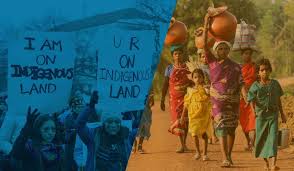
Indigenous Communities Demand Land Rights Recognition
Across the globe, Indigenous communities are intensifying their calls for the recognition and protection of their ancestral lands. These communities argue that securing land rights is essential not only for preserving their cultural heritage but also for combating climate change and ensuring sustainable development.
Brazil: A Battle Over 'Marco Temporal'
In Brazil, the debate centers around the controversial "marco temporal" (temporal framework) theory, which limits Indigenous land rights to areas they were occupying or had formalized claims to at the time of the 1988 Constitution. This perspective has led to widespread protests, including the annual Acampamento Terra Livre (Free Land Camp) in Brasília, where thousands of Indigenous people demand the demarcation of their lands. Despite the Brazilian Constitution recognizing Indigenous land rights, the application of the marco temporal theory threatens to undermine these protections, leaving many communities vulnerable to encroachment and exploitation. AP News+2Al Jazeera+2Al Jazeera+2
Colombia: Threats to Ancestral Territories
In Colombia, the United Nations has issued a grave warning about the potential extinction of five Indigenous groups—Kogui, Wiwa, Kankuamo, Arhuaco, and Ette Naka—residing in the Sierra Nevada de Santa Marta. These communities face severe threats from armed groups vying for control of their territory, resulting in forced displacements, violence, and the disruption of local governance. The UN emphasizes the need for comprehensive measures, including improved healthcare, education, and economic opportunities, to protect these communities and their ancestral lands. AP News
India: Forest Rights Act in Action
In India, Indigenous communities are asserting their rights under the Forest Rights Act (FRA), which recognizes the rights of forest-dwelling communities to land and resources. For instance, 52 Jenu Kuruba tribal families in Karnataka's Nagarahole Tiger Reserve have installed a sign declaring ownership and self-governance over their ancestral land. This act challenges the forest department's authority and highlights the community's commitment to protecting their rights and environment.